
How the Social Design Framework went from pen and paper to an AI tool that prompts founders to think differently.
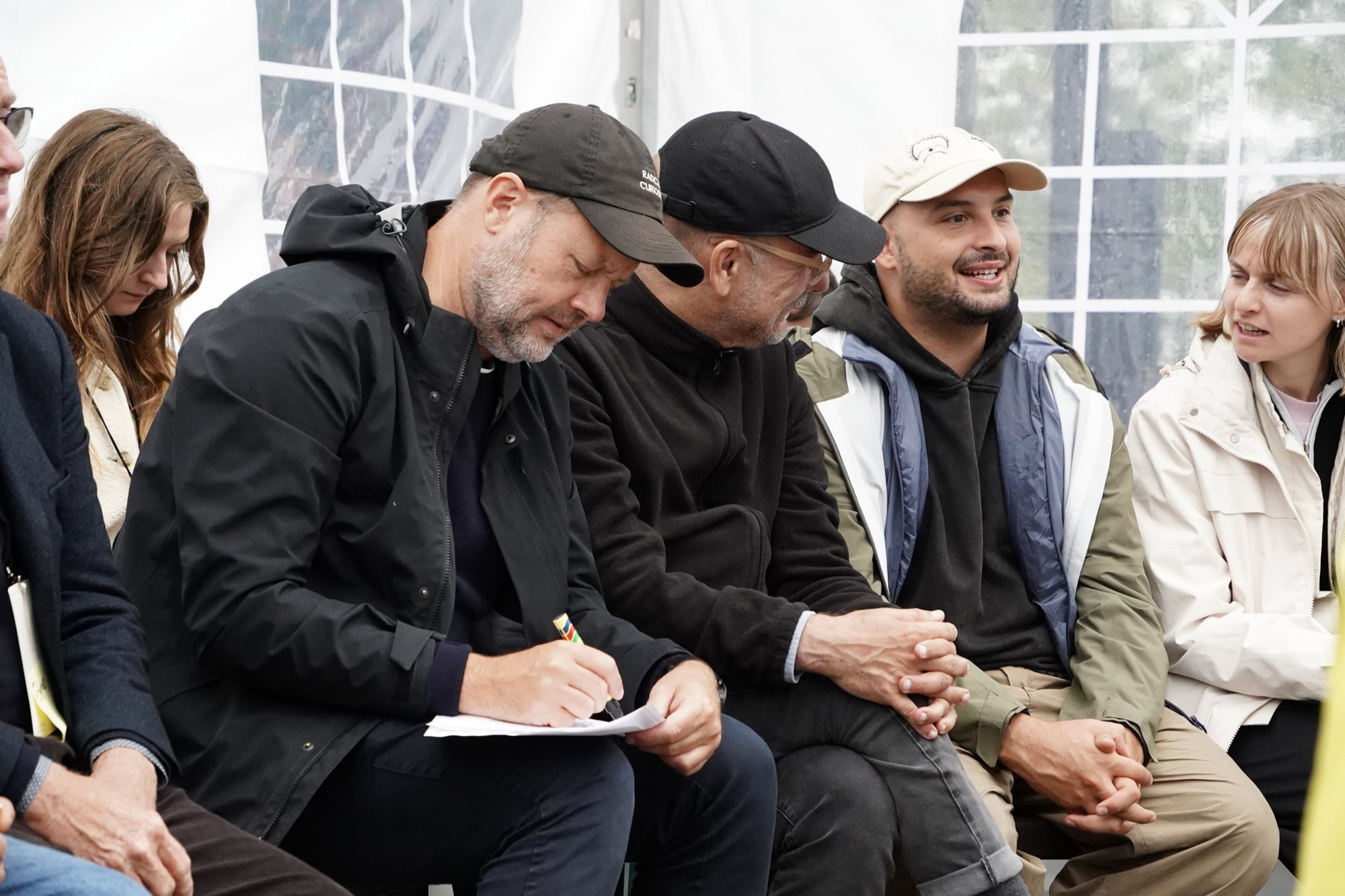
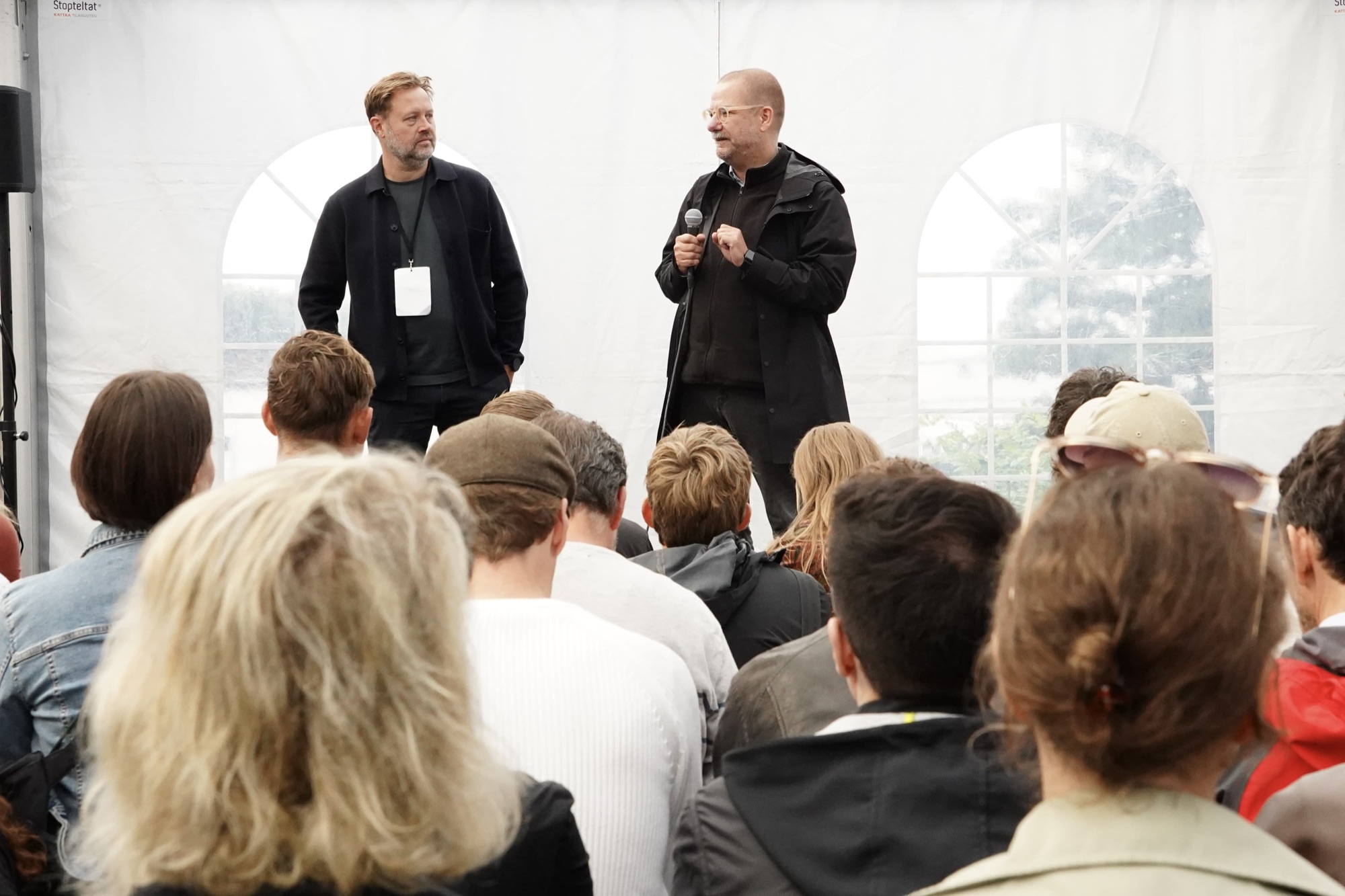
At the end of Rebuild1, the Social Design Framework track leaders Martin Sønderlev Christensen and Alexander Baumgardt were exhausted but exhilarated, scrambling to make sense of all the ideas and input they’d received. With pen and paper, they’d devised a rough framework of sorts, but attendees were coming up to them asking “can I use this now?”. It needed more work, says Baumgardt, who was thinking about building templates or “traditional workshop style thingies” for self-guided facilitation. “But then Rebuild was over and a light went on.”
As Christensen was headed home, he thought “I need to build this”. He’d gone into the Copenhagen gathering understanding that “in the future, designers and founders are not going to take all the decisions on how design gets built,” he says, “that’ll be agents.” So he wanted to make sure that the social design principles they’d curated were machine readable. “And it was just easier to build the whole thing.”
Two hours of vibe coding later and the first iteration of the Social Design Framework interactive tool, the same iteration that attendees of Rebuild2 spent 48 hours testing, was born.
The tool is “a practical lens for designing and evaluating social platforms around genuine human connection rather than pure engagement metrics”, per the website, and it allows founders to do just that. Choose what you want to do: review a platform, design a new platform or review the framework, then after a short wait, read the resulting assessment. If you’re reviewing a platform, the tool gives you scores for each element, from the social object to core concepts such as conversations, groups and agency. A 3/5 score is “adequate”, but 2/5 is “problematic”, and each segment unfurls into a wider analysis, showing your platform’s current strengths in that specific area, what unhealthy patterns are emerging, plus a list of recommendations and questions to ask your team.
“There were some onboarding challenges,” says Julián Medrano Hoyos, a Paris-based multidisciplinary researcher who worked on the Social Design Framework track. The content was quite dense, then you needed to choose your AI model and (if you’re not using Mistral) enter your own API key. But at 6:40am, before kicking off the final day of Rebuild2, Christensen woke up and decided to make it a bit easier. He put in a prompt, asking for a bot that would help teach the framework gradually via a conversation, and jumped in the shower. By the time he was ready to leave the new feature was ready.

With so much flak against AI design of late, I ask them if they’re worried their AI-fuelled design framework will lead to more monotony. No, is the short answer, because the framework isn’t there to do the design work for them, but to help to shape the user experience in a way that matches the non-extractive ethos that Rebuild has laid out for the future of European social platforms.
“You can throw this into Lovable and get a full wireframe spec,” says Christensen, “but that’s not the point, the point is to have iterations, to think, to get prompted by what you prompt.” When you’re working on a platform for so long, it’s easy to get stuck in your own thinking, but this AI system can prompt you to think a little differently. “That’s the purpose of it, not hitting people over the head with design principles that you need to adhere to.”
“The point is to have iterations, to think, to get prompted by what you prompt.”
Martin Sønderlev Christensen
“Obviously the underpinning is that we want to make better social platforms, we want to make more alternatives, alternatives to the ones that are harming the world,” he continues. “But the principles are more like the UN goals rather than legislation of EU law.” They’re aspirations, guiding principles, not strict rules intended to keep every new European social platform inside one very tight box. Instead, they imagine founders using their new system as a shortcut to keeping themselves accountable to the vision shaped by Rebuild, a tool they can use to interrogate the ethics and morals baked into the programs they produce.
“It gives you the opportunity to think about things in a different way,” says Christensen. “It’s a scaffolding to climb on.” Baumgardt agrees. “It’s important that the social platforms make their own choices,” he says. “For us, we’re not seeing this as a product but as an enabling tool.”
“The principles are more like the UN goals rather than legislation of EU law.”
Martin Sønderlev Christensen
Historically, the only real way that social platforms have been evaluated is through people’s preference, explains Medrano Hoyos, “which is a big problem.” We keep using addictive social platforms, thus they are deemed to be the best model. “I like to think of things from a historical perspective,” he continues, “so I think it’s important to see how previous evaluation tools have been built and learn from the mistakes of those kinds of tools.” In this case, the mistakes they’re learning from may be our own highly manipulatable brains.

When Instagram was run through the Social Design Framework’s tool, it scored just 2.2/5, and other prevalent apps Medrano Hoyos tested also scored on the lower end. “I don’t know which are the biases of the tool yet,” he says, “but the ratings are on par with the idea someone would have of the platform.”
“It’s important that the social platforms make their own choices.”
Alexander Baumgardt
Medrano Hoyos sees the tool like a filter: users can pick whichever AI model they’d like as a base – one Rebuild2 attendee used a whole team of his own agents to guide it – and filter it through the Social Design Framework. So, as the AI infrastructure evolves, the tool can evolve with it.