
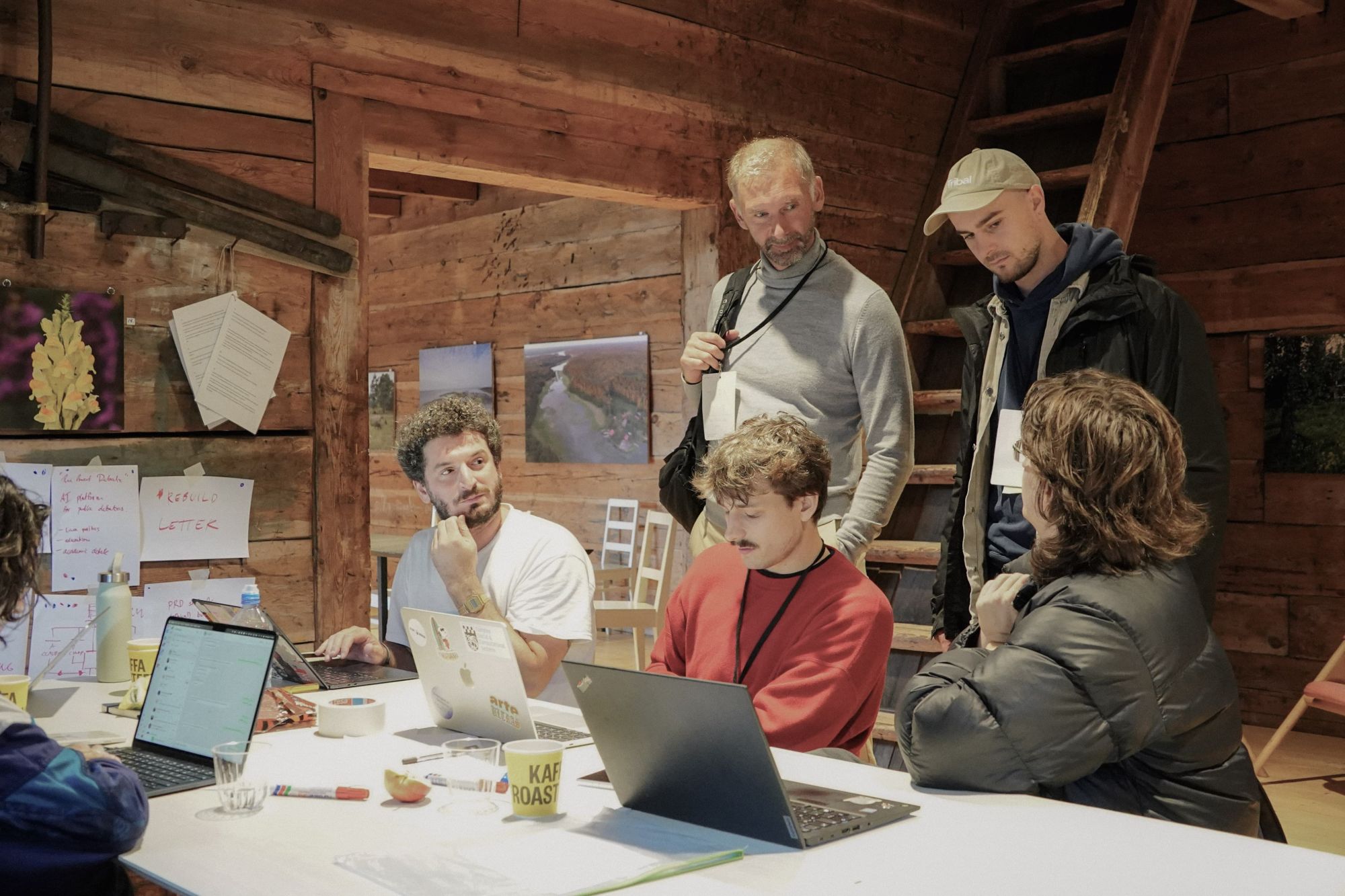
Seven prototypes, two days and one question: what if AI was a social experience rather than a personal one?
Check out the prototypes on GitHub
Just 24 hours into Rebuild 2, our Prototyping track had already developed a product that Margrethe Vestager wants to test at the European Commission. She hinted at its benefits – real social collaboration – at the end of day two, and by the closing ceremony on day three, all the attendees got to experience a fully fledged demo.
“Imagine that AI was not a personal experience, but was something social.”
Thomas Madsen-Mygdal
“It’s like Git for writing,” says Tim Booker, a programmer on the Prototyping track, “which is a very useful thing for people like us.” Usually, when you’re working together on a document, on Google Docs, for example, collaborators can request changes, accept changes and respond to each other’s comments, but the process isn’t truly collaborative. Often, his fellow Prototyper Ruggero Marino Lazzaroni explained on stage, the meaning of the document evolves without anyone really noticing because the changes are so subtle. “So you’re actually editing someone else’s truth.”
On the Writ platform, however, the AI system underpinning it tracks the meaning of the document. When collaborators propose edits, the tool compares the edits against each other – and any style guides or guardrails the document’s owner has set – to work out whether they’re compatible or pulling the text in genuinely different directions. When two edits diverge, an AI agent steps in to facilitate, summarising what each person changed and proposing ways the edits can be combined in a way that suits both parties, but doesn’t change the intended meaning.
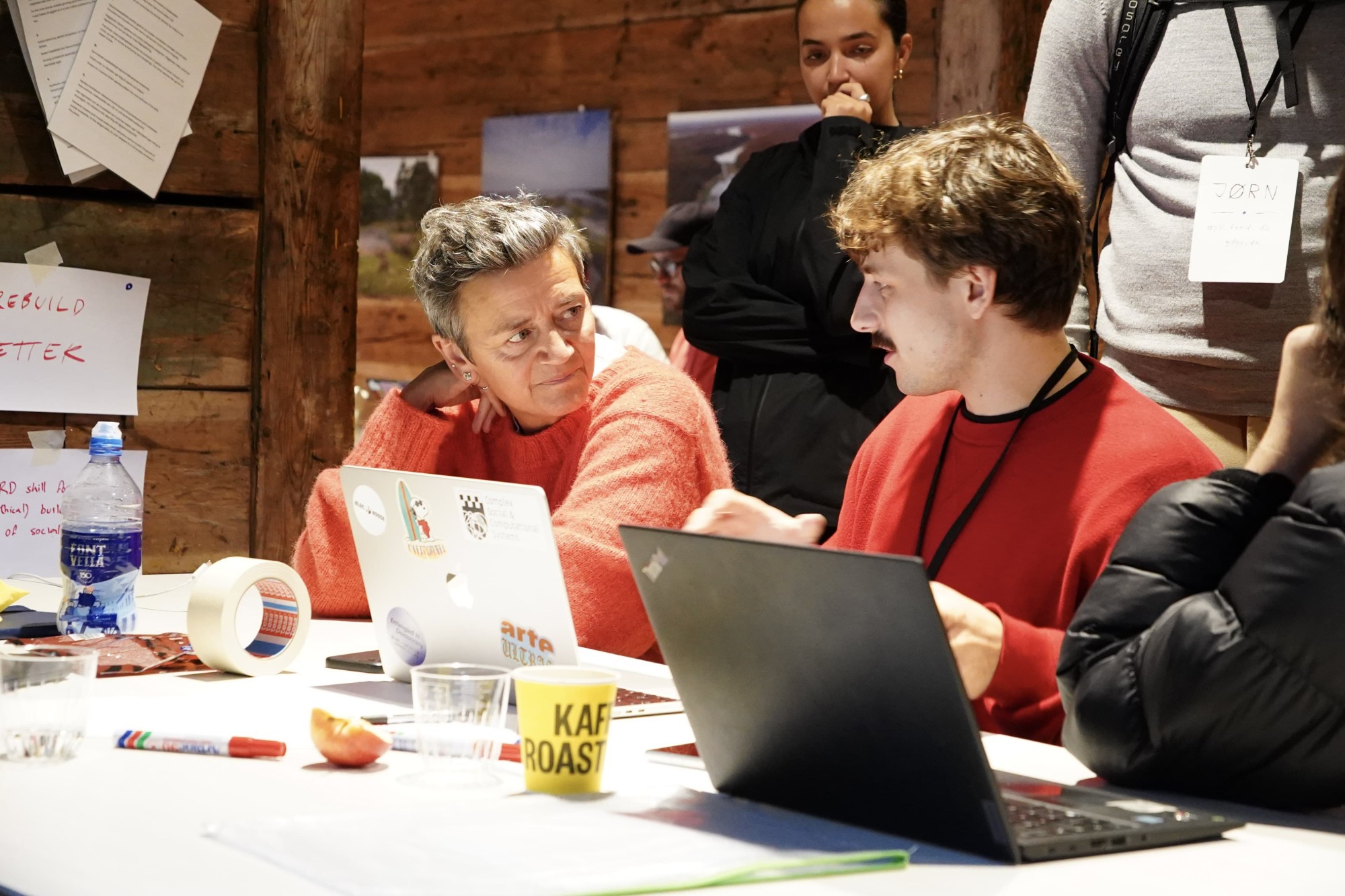
Writ is just one of seven prototypes built during Rebuild 2’s 48 hours. The others included more practical applications for Rebuild specifically: a skill used by the Social Development Framework track on the tool they were honing, and the Rebuild Letter landing page, which was built to help push the letter out to as many people as possible. There were also some social plug-ins that encourage real-life connections: a contacts app that links to a Pokémon Go-style interface, so you can meet up with mutuals without needing Facebook or LinkedIn (which may already be available in the App Store), and an in-chat AI agent that will do all the grunt work in your group chats. Another prototype, called “Open”, was a platform with total algorithmic transparency, so if you tap any post you can see why it’s popped up on your feed, and adjust whether you get any more of it (or swap algorithms with someone else entirely).
“It's important to have the geeky group in a corner that are trying to come up with not the perfect or the right answers, but the quick ones.”
Steffen Fagerström Christensen
After all, explains digital product designer Sarper Erel, who headed up the track: “If I trust your taste in literature, why can't I just tap into your literature input, because it's probably better than mine? If somebody's really into football and I want to get into football, why can’t I tap into their stream?”
The most intriguing – in this woman’s view anyway – was the agentic debate platform, which Booker led the build on. “As a researcher, it can sometimes be hard to live out the debates I've always wanted to see from my favourite thinkers,” he said on stage. So, he built an agentic system to model those debates. “And I realised something,” he continued, “this is extremely entertaining.” The final prototype was a social platform built around these agentic arguments.
Just paste a news article into the platform, and the system assembles a panel of agents representing the stakeholders and viewpoints involved. Then, they debate. The system shows live stats, traceable claims (with sources), viewer comments that can spawn a new debater and a running map of what’s been agreed, what hasn’t and where a debater changed their mind. “We don’t want a propaganda platform, but we want a platform where views, in their strongest form, can be demonstrated,” says Booker. “It’s great to read.”
“But there is an opportunity to introduce a social layer on AI.”
Sarper Erel
Every prototype was aiming to solve a moonshot that Thomas Madsen-Mygdal had laid out on Day 1: “Imagine that AI was not a personal experience, but was something social.” Could this be the area where Europe comes in to lead on AI?
“I don't think there's one moonshot AI app – it's not this monolithic thing,” says Erel. “But there is an opportunity to introduce a social layer on AI.” His co-leader, Steffen Fagerström Christensen, argues there is a natural fit for Europe, and European values, in this space, where a higher level of trust is necessary (Anthropic picked the name Claude for a reason…). “But also, we haven’t used it,” he opines.
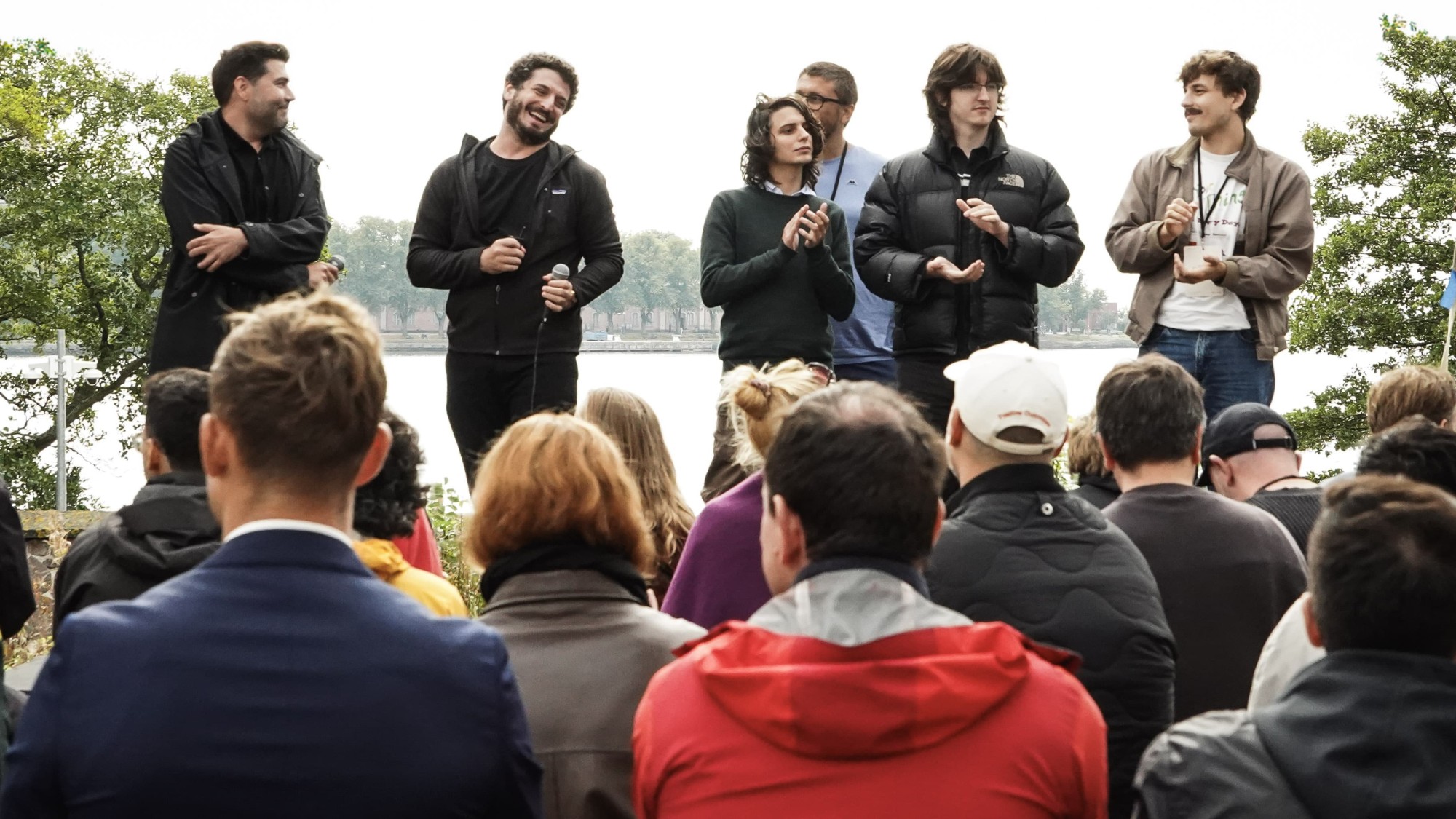
“There’s certainly more trust in society, there’s certainly more trust in each other, there’s a lot of things that are working in our favour, we just haven’t been able to articulate them in how we build social media,” Christensen continues, “or we haven’t been able to put enough value on it to have people pick the social media that we’re building… which is damning.”
The prototyping team weren’t trying to solve all of Europe’s social platform problems – as Christensen says: “It's important to have the geeky group in a corner that are trying to come up with not the perfect or the right answers, but the quick ones” – but going through the process of building brought up new questions. “How does the whole design in Europe, with European values, not become a stick to beat people with?” asks Christensen, “How is it actually something where the actual trust and society, all the things we value, become part of how we build apps?” He didn’t have the answer, but it’s exactly what Rebuild is building towards.