
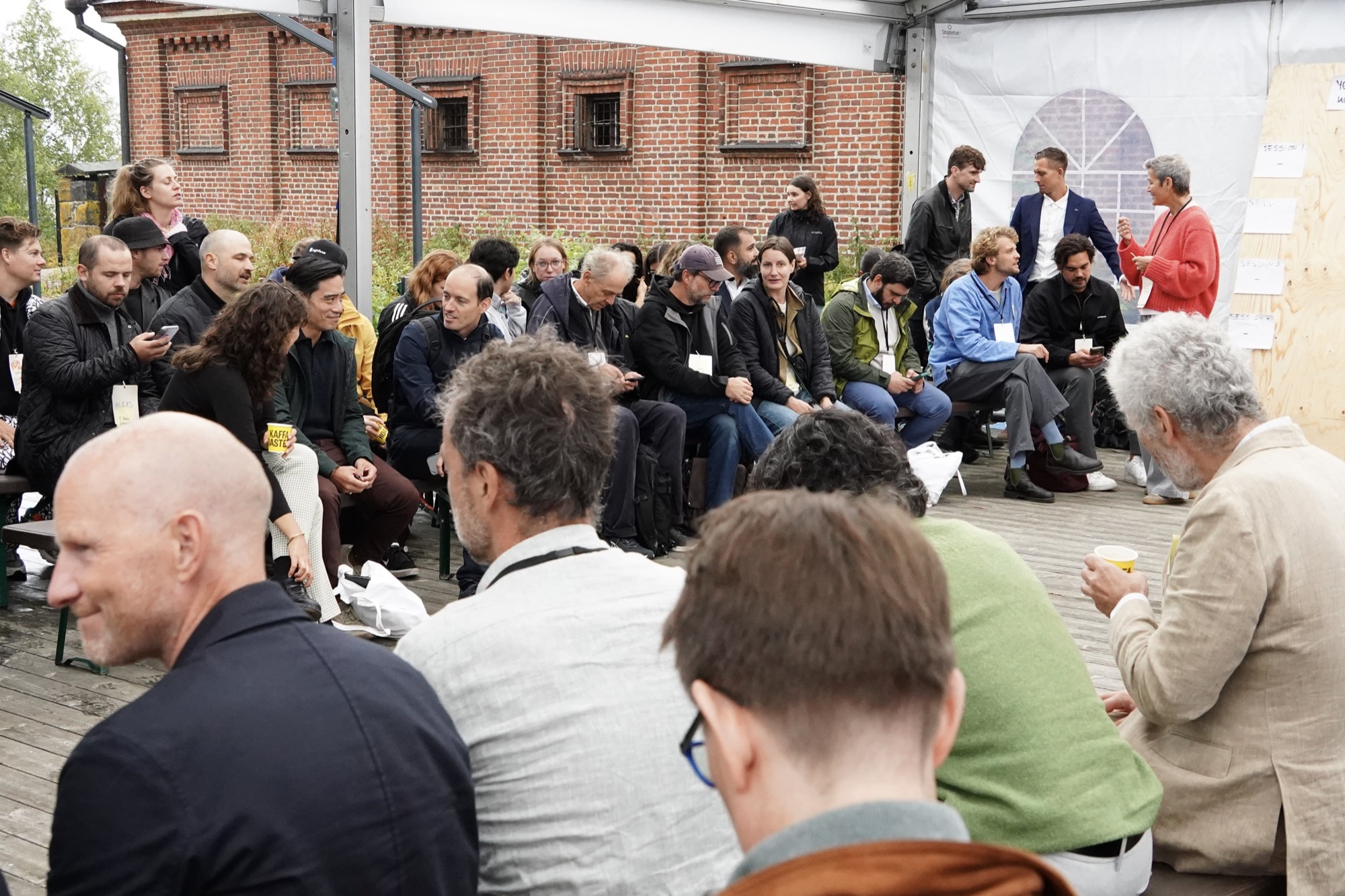
Seven startups pitching at Rebuild2 on building social platforms for real connection – online, offline and everywhere in between.
One of the most exciting elements of Rebuild is the opportunity to see new startups in the European social space – all at different points in their journey – and to experience the breadth of ideas and platforms which are redefining what ‘social’ can mean in the modern era.
On the Monday morning on Lonna, we heard from some of the most exciting founders and builders operating in Europe right now – all different, all at different stages of their development and funding journey, but each with a focus on helping people connect meaningfully, in real life rather than just in the digital space.
Meet5, which started in 2017, is a product designed to help older people meet each other in small groups – as the name suggests, you meet with 5 other people to form a group of 6. Why 6? Smaller groups make it simpler to foster real social connections and to have meaningful interactions. With 6 people in a group on a table, you have multiple conversation streams or a single, group discussion; it’s a manageable size, but it allows for dropouts and the conversation can still flow. Meet5 started as a dating app for students, but as time passed the founders realised that older people are more reliable, and helped with delivering good KPIs – after all, older people are more likely to show up to a meeting when they say they are going to! The app pivoted to focus on older users – 40+ – and away from dating; it was about connections and getting to know people in real life. Meet5 is a German company from Frankfurt, which expanded into Benelux and is now growing in France and into the US – 4 million total users, with 400k a month joining in with group activities through the app; every 3 seconds, someone meets a new person on Meet5. This success was achieved through comms and marketing – and, in new markets, through paid-for user acquisition. In the early days, though, this was built through very hands-on means, with Meet5 staff joining online communities and Facebook Groups and promoting the app through granular personal outreach – which worked, because it’s an app about personal connections!
Every 3 seconds, someone meets a new person on Meet5.
MYCY is an app in development, promising a return to calm spaces and a point of focus, a reconnection loop rather than a feedback loop. The principle is simple; you see posts you like, you tag them, and the site will repropose them to you in the future, placing a focus on quality content rather than volume, and enabling you to come back and return to people and concepts that you value rather than ones that are just…there. There’s also a focus on allowing for a better, more thoughtful approach to posting, toying with the idea of posts being friends-only for 24h before becoming available worldwide. Its co-founder sees MYCY as part of an holistic approach to redefining how we connect with media and each other – slow food for the brain. Whether this is a feature to be built into emergent platforms or a network in itself is still to be determined, but it’s an example of the way in which people across European tech are thinking about reconfiguring the way in which we conceive of ‘social media’ as a concept, not just attempting to recreate existing mechanisms and protocols.
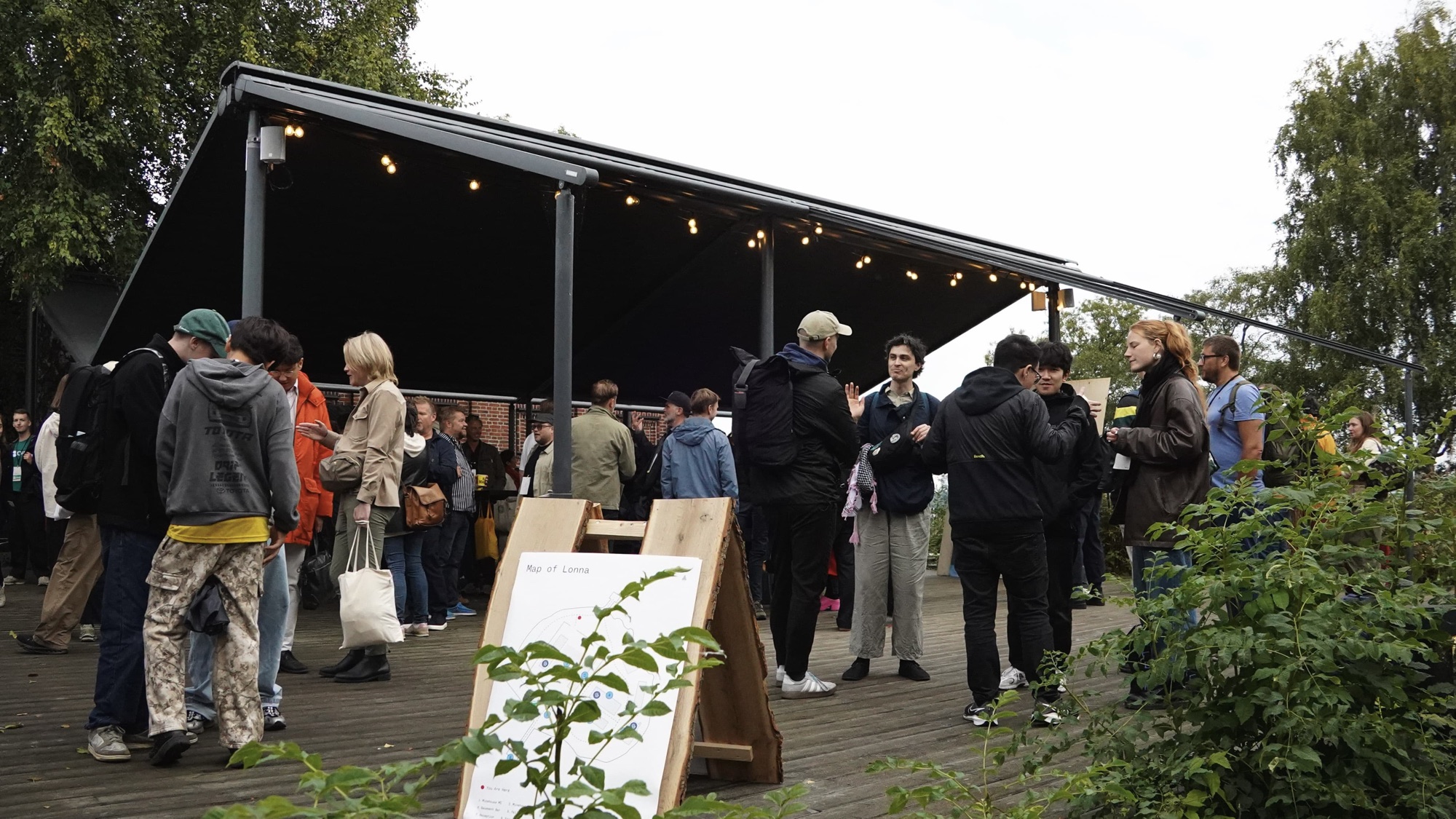
Pond is born from the insight that 30% of Finnish young people – and 15% of all working-age people in Europe – feel alone or socially isolated once a week, made by two young entrepreneurs. It’s designed to connect people based on lifestyle, personality and interest, recommending groups and activities, but which is designed to take people offline and help them connect in real life, and to let users customise the manner in which they present themselves to help reflect the complex, multifaceted nature of people’s personalities rather than the one-size-fits-all profile approach taken by existing social networks. It aims to launch in universities and then expand, with a monetisation model based on venue and organisation partnerships.
Slow food for the brain.
Social Human is looking to solve the problem of authenticity in modern media; we have almost lost the ability to distinguish machine-made images from real photographs or video, and social platforms are becoming flooded with AI content. Built by a professional working in AI, Social Human is working to create a network on which every single post is proven to be real; all media uploaded is recorded through the in-app camera, so no pre-generated material can be used, guaranteeing the authenticity of all visual media through a simple and effective mechanic – and providing a really interesting template for other platforms to follow.
Touchbase defines itself as ‘a personal trainer for social health’, helping people maintain connections with their loved ones rather than create new connections with strangers. There’s a well-documented social phenomenon in the modern age where our lives are busy and chaotic, and we often neglect the nurturing human relationships in our lives. We are anxious, we are scared of rejection, and we let that get in the way of keeping in touch. Touchbase helps with this by giving gentle nudges to users to reach out to their friends and family, with ideas and prompts of things to say – not to put words into their mouths, but to gently ‘unstick’ the social process and get people talking again…not through another app but through existing channels, and maybe even in real life. Working on a freemium model, there’s a tiered functionality structure to drive monetisation.
IRC Galleria is one of Europe’s (and Finland’s) longest-running social platforms, around since 2000 and founded as a social gallery for IRC users but which evolved into a more fully-featured social platform. At its peak it was being used by 10% of Finland’s population; now, though smaller, it still has 50,000 monthly unique users who have filled the site with 12m pictures. Its founder estimates that thanks to connections made through IRC Galleria, 20,000 new Finns now exist – which is perhaps the greatest metric of all for a social platform, and a beautiful demonstration of the impact that networks can have even when they don’t have a billion users. Passion and staying power makes a product that changes lives.
Thanks to connections made through IRC Galleria, 20,000 new Finns now exist.
Coall, built out of Warsaw, describes itself as a personalised discovery engine for people, societies, events and venues, helping people spend less time on the logistics required to organise things with their friends, and bring a degree of simplicity to what is a strangely messy and fragmented process. Rather than requiring people to use multiple different apps, websites and platforms to organise, the theory behind Coall is that you can do everything through a single system – a process that takes 40 minutes right now can take as little as 4 minutes, including organising your mates and splitting the costs.
While each of these platforms is unique, and approaches the question of what a ‘social platform’ is and can be in different ways, each is attempting to use technology to foster better, deeper connections between people, with information and with the real world; each demonstrates the range of options that exist within ‘social media’ and what, with imagination and novel thinking, it could and can become.