

The story of Adegga, how it scaled to 50,000 users across half the world's countries and why André Ribeirinho believes offline is where online gets real.
When André Ribeirinho told his grandmother he was launching an internet business, her response was: “Is it going to be on TV?” It was 2006, so the aura around tech startups hadn’t quite accumulated yet – at least not amongst older Portuguese women. “I guess, she wasn’t the target market,” Ribeirinho laughs. “From people online, the interest was much higher.”
The platform in question was Adegga, a social network for wine. Ribeirinho, a software engineer at the time, had been looking for a new project and heard a few people complain about how difficult it was to decide which wines to buy. And – after reading Chris Anderson’s book The Long Tail, which explained how the internet would give us infinitely more options than would be available in physical stores – he knew that problem would only get bigger.
Adegga was his solution. Users could log-on and follow each other to discover and discuss what they were drinking. “I actually didn’t like wine at the time,” he recalls, but when he spoke to people who were into it he could see how special it was to them. “They all had this spark in their eyes,” says Ribeirinho. “So I got interested too.”
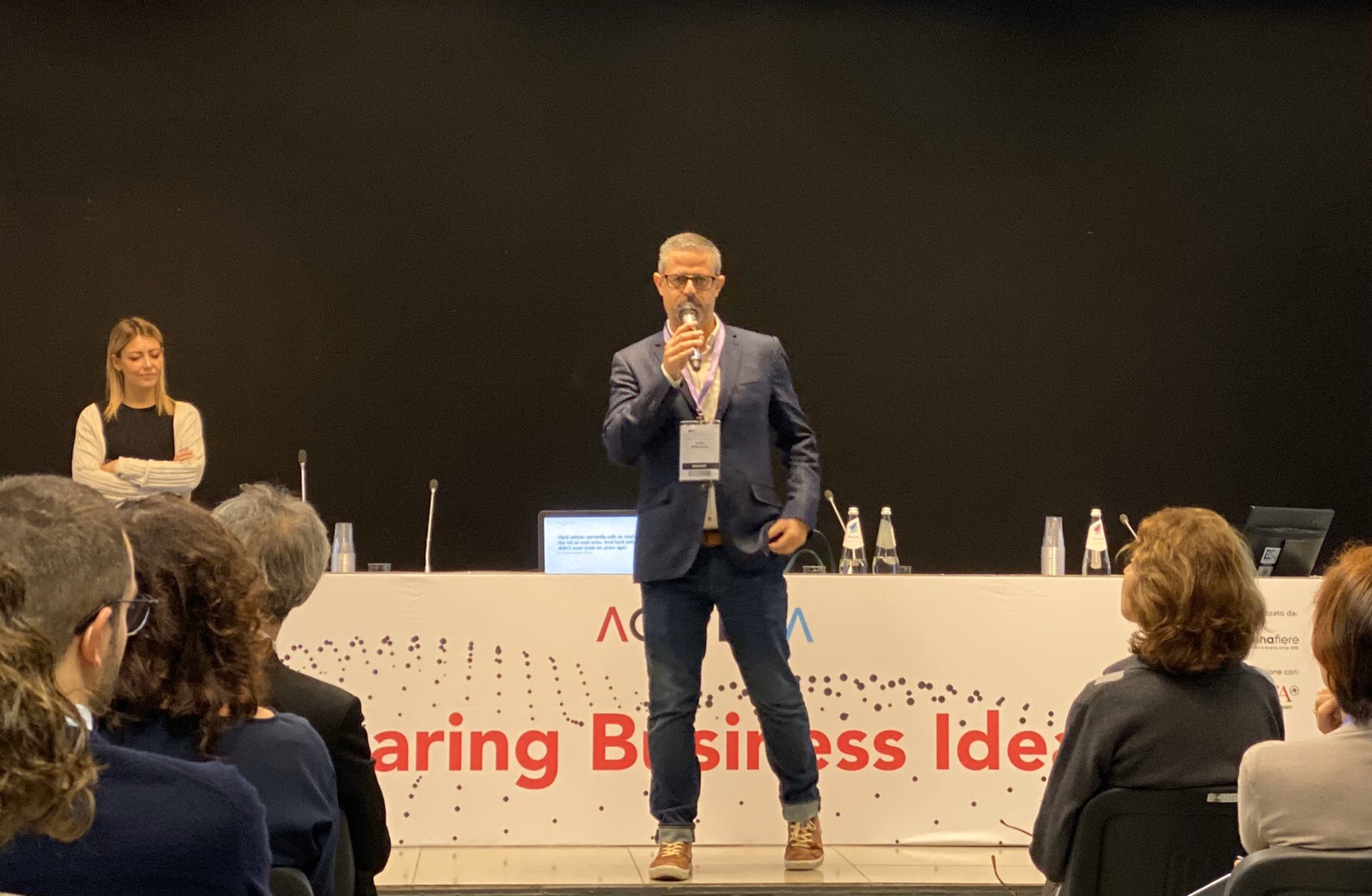
The instinct to build was something he’d been following for over a decade. “There was a period of discovery,” Ribeirinho says, remembering his first website, which he put up in 1996. “I’d been playing around for a while.” But that impetus to find a solution to a problem, and make it happen, was also “embedded in the spirit of how the web was growing”, he says. “It was making the world better connected and opening this large window of opportunity.”
The idea that he, a young guy in Lisbon, could create something that would be accessible from anywhere in the world, was enchanting. And that feeling was only solidified further when he attended the Reboot tech conference, which brought together likeminded builders. “You meet face-to-face with people who are dreaming about this new future,” he says. “It’s an igniter, it’s this beautiful moment where you understand that you’re part of something.”
“You meet face-to-face with people who are dreaming about this new future.”
André Ribeirinho
He’s speaking to Rebuild from the same desk he was using when he was building Adegga, a nondescript piece of furniture that used to be his dining table. “I love it,” Ribeirinho says, not for its aesthetic, but because of what he’s achieved while sitting at it.
Adegga was born months before Facebook had made it to Europe, and years before Vivino was available on the app store, so the idea that you could build communities online, let alone communities of wine drinkers, was still very nascent. It took guts, imagination, and the ultimate belief that the internet was a place for connecting people, to make it happen.
“Social is actually better when it’s used as a starting point.”
André Ribeirinho
Adegga went through multiple iterations. In 2009, Ribeirinho started doing physical events – recreating, perhaps unintentionally, a similar spark to the one he felt at the Reboot conference years before. “We kinda made a move from the online, being a place of discovery, to offline, where people could confirm they enjoyed the wines, buy the wines and meet more people,” he says. “And it also had a compound effect, because the more people you meet offline, you could then connect with online.” Ribeirinho experienced that himself; he met one of his best friends and now business partner at the first event.
“Social is actually better when it’s used as a starting point,” he says, explaining that there’s “magic” in bringing digital relationships into the physical world. “The connection between the online and offline is so powerful.” His own in-person events, Adegga Wine Markets, scaled massively in Portugal: thirty sold-out events over ten years, each with more than 1,000 attendees.
“The connection between the online and offline is so powerful.”
André Ribeirinho
The pandemic brought those in-person events to a halt and ultimately marked the end of Adegga, which no longer operates. But not before it had brought thousands of people together. “I ended up getting invited to go on the news,” Ribeirinho says. And, most importantly, his grandma finally got to see him on TV.
Key figures
- 100.000 MAUs at its peak
- 5 employees
- 50.000 registered users, from more than half the world’s countries
Learn more about André Ribeirinho at andrerib.co and his agency, pageradar.com.