
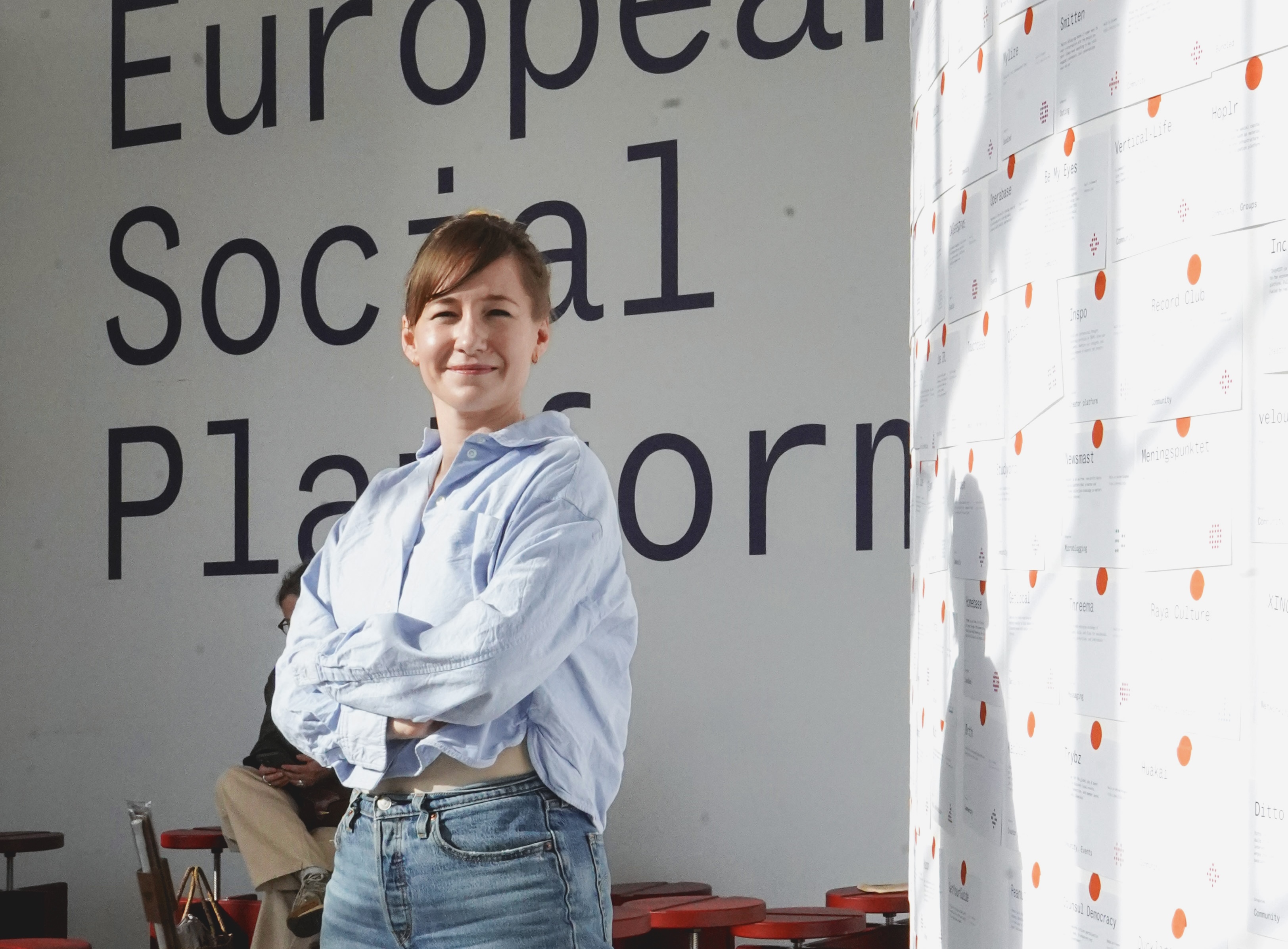
Permission to roam: why Linda Liukas wants to give children back the internet
Linda Liukas is originally from Helsinki and has been living in Paris for "half a decade… which is insane." She still introduces herself as a children's book author and an illustrator, having found fame by penning the book 'Hello Ruby' in 2014. But her real work is making computer science approachable by focusing on "the big ideas rather than the tools." Not "how to code," but "what are the big ideas that computation offers to the world and how should we be talking about them for the smallest and most powerful ones of us around?"
Her pedagogy is explicitly European: she draws inspiration from Montessori and Reggio Emilia, and she thinks in materials as much as media, "whether it's Play-Doh or books, crafts or playgrounds."
Rebuild, for which Linda is an ambassador, begins with a belief that physical places matter. "Living in Europe, I feel like physical places have become more important for me through the playground work I've done," she says, "understanding how cities work, how local government works, and how we build something that lasts for like 20, 40, whatever years." Linda's thesis is that the online world has become a public space, and that we've been designing it badly.
“What is good for children is good for everyone.”
Linda Liukas
She's struck by how narrow the conversation about children and tech has become. "The only answers we're offering right now are answers around restrictions… and a big fat no for the kids." She suspects this comes from adult fear, and from the fact that we've already done something similar offline: we made playgrounds safer, we shrank the perimeter children are allowed to roam within. But in urban planning there's a powerful principle: "what is good for children is good for everyone." Designing for children forces care, awareness, and intentionality, "and I think the internet hasn't had that moment. Like we've just decided to build fences instead of designing for everyone."
You can't remove kids from the internet anyway. Linda calls herself part of the "hinge generation" (we might say Xennial), having had an offline childhood coupled with early internet moments that felt like teleportation: "whoa I can be anybody anywhere and travel seven times in a second around the world." She wants other kids to have that opportunity too. Her metaphor is the Japanese show Old Enough! where toddlers are sent on errands while a camera follows: you watch them panic, fail, recover, but you also see the social scaffolding that enables this culture of experimentation and low-stakes risk-taking, cities built for kids, community support, public policy that makes streets safer, and a culture where parents allow agency. Europe, she argues, should bring that spirit online: give kids "permission to roam the internet," stay interested in what happens there, and, as she puts it more simply: "Build an internet that is worthy of our children."
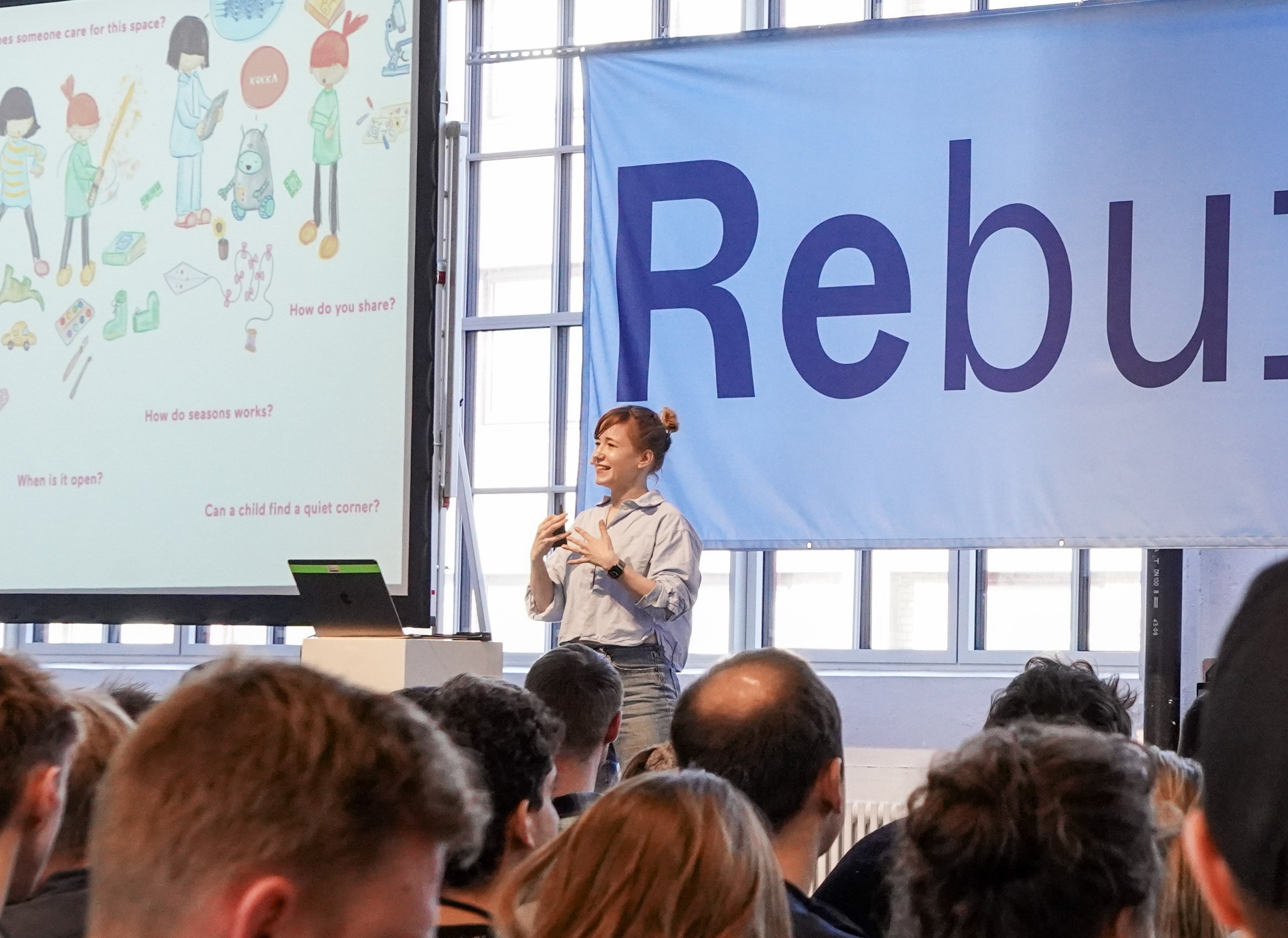
A lot of her thinking comes from the literal computer playground she designed in Helsinki, a huge input-output machine where kids crawl through representations of CPU and RAM. She and her team didn't ask kids to draw fantasy playgrounds; instead they asked about experiences: something fun they had experienced on a phone and in a playground; something scary in both; and something they were proud of building digitally and physically. The findings were blunt. First: for many kids, "public space is now a Fortnite lobby." This led her to the realisation that we should design public spaces, physical and digital, that are as welcoming as the places kids actually gather. Second: "a lot of the scary stuff has moved from public spaces to digital spaces." Every single child could name one or two scary online experiences: a video, a call, "bad people." Third: kids don't separate digital making from physical making. They're proud of forest huts and snow castles, and equally proud of Minecraft worlds. "We just need a language… more metaphors, more stories" to bridge those experiences.
Asked about European social platforms, Linda goes straight to the built environment. When she heard about Rebuild, she asked: "How many architects are there in the room?" Europeans are "so good at designing public spaces, the cities, the cathedrals, the courtyards, the libraries." Her hope is that the next leap in computing is less screen-first, less "smart city" surveillance, and more "situated, spatial": "build computation around us, not over us." What she terms 'public space computing'.
“What if we turn the things that people complain about Europeans into something that becomes an asset?”
Linda Liukas
Why Europe? Because the things people mock may be to our advantage. When critics call Europe "an outdoor museum," Linda's response is: what's wrong with human-scale places that feel good to be in, that have a relationship with history, and which look back as well as look forward? Tech culture is often obsessed with the future and forgets history; Europe's "archivist's sentiment" and contact with the past can help us build better futures. "What if we turn the things that people complain about Europeans into something that becomes an asset?"
And her time horizon isn't five years. It's twenty, "the amount of time it takes for a small kid to go through school and university." In that span, she hopes we move away from a mass-market internet, like the globalised high street where all the shops look the same, towards "local software and local cuisines… flavours" that still connect back into a shared "one earth" feeling. Rebuild, in that sense, is a design project as much as a tech project: convening people to imagine, then building public digital spaces that are worthy of the people – especially the smallest ones – who have to live in them.