
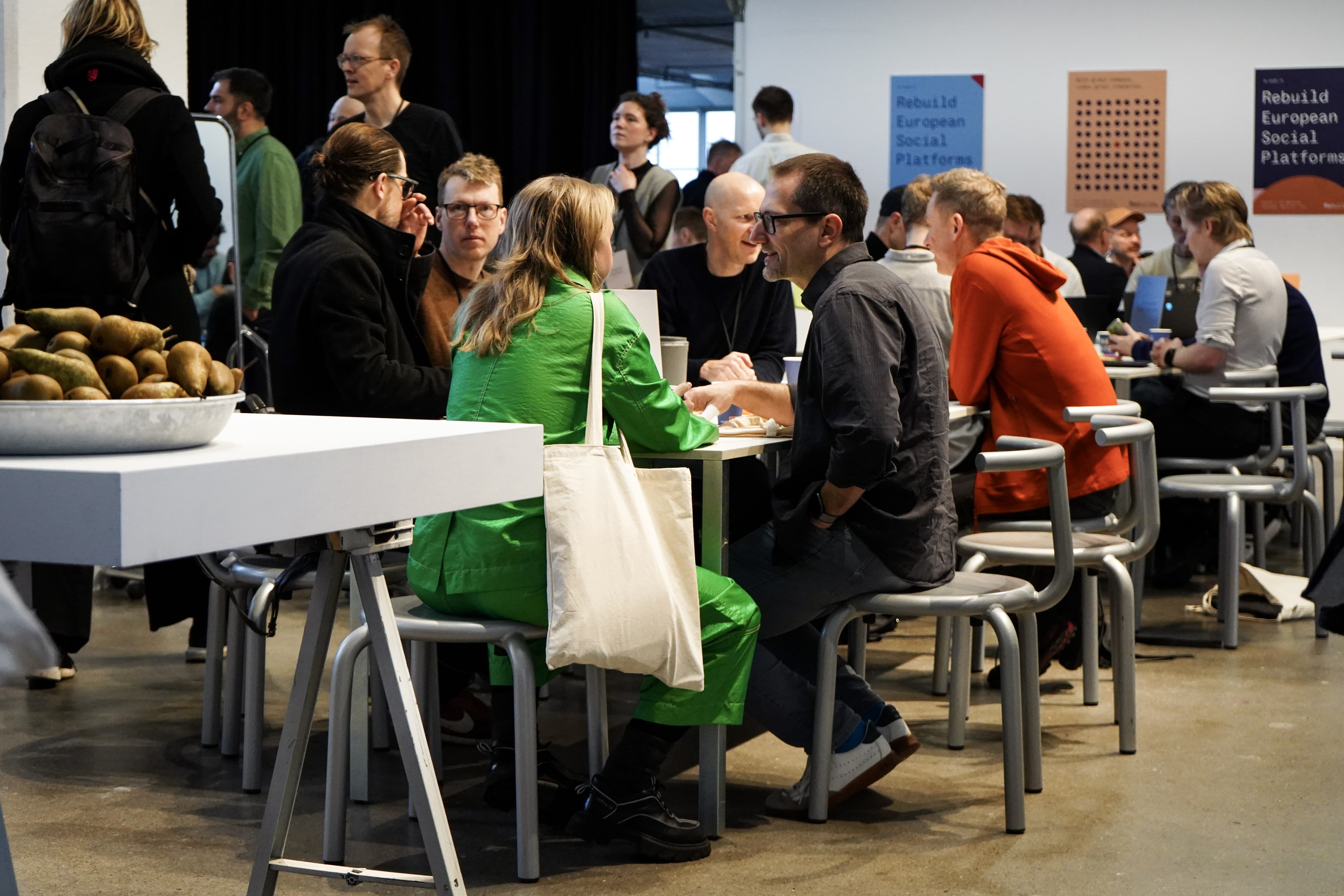
Europe's new generation of social platforms share more than an ethos – they're building a movement
A recurring theme at Rebuild1 was the vital importance of both community and collaboration – in terms of both the founder and builder ecosystem across the continent, but also the role that the two concepts play as foundational elements of a successful democratic society.
The two concepts were also central to many pitches and presentations, with platforms highlighting dwindling social cohesion, both online and off, across the continent, and how they were building to address that need.
It was striking how many of the founders – behind what are in many respects very early-stage companies – drew on personal experiences of the sort of small, collaborative communities that proliferate across the continent. Different in expression but bound by a common ethos.
“The connections, relationships and communities that matter to us, are taken hostage”
Anders Lemke-Holstein
Martin Elneff, the founder of Heynabo, lives in what might loosely be described as a 'commune'. Jeppe Liisberg, who is building ZenSocial, is part of an ecovillage community; elsewhere, the founder of a German-based platform has a background in social sciences and has spent two and a half decades studying the ways in which communities function and come together for greater good – and what happens when they fail.
The general consensus that permeated the gathering was that many incumbent community platforms no longer seem to do what the communities that rely on them need. Perhaps as a result of the predatory practices of existing platforms.
As Anders Lemke-Holstein, the founder of Oase, puts it, "…the most important parts of our lives, the connections, relationships and communities that matter to us, are taken hostage and pulled into platforms that want our attention and money and don't necessarily care about the users or their goals."
What was equally clear was that there is a real appetite amongst European builders to create solutions that plug the very obvious gaps in the community-focused toolset, in ways that learn from the mistakes and missteps of the past 15 years.
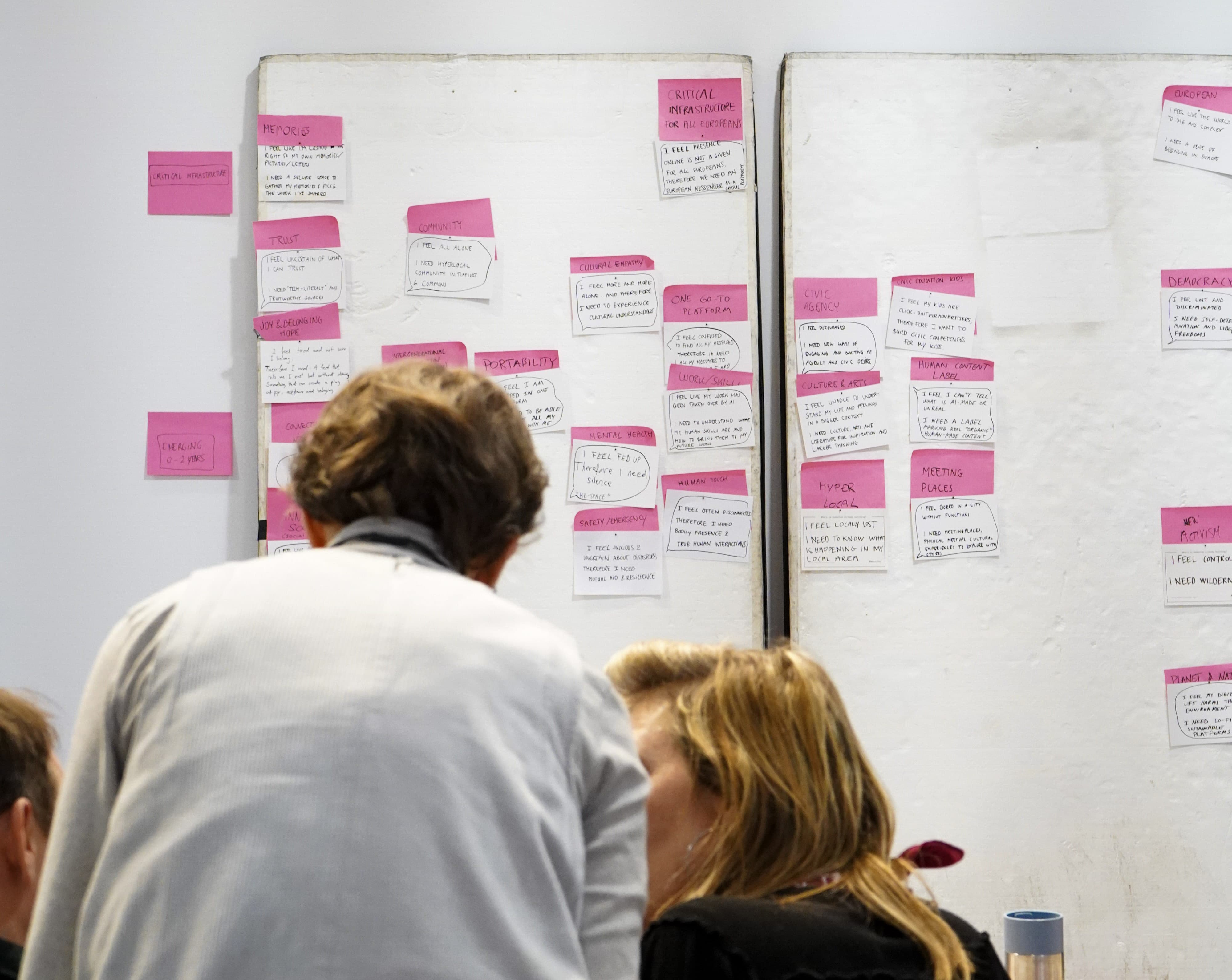
As the team behind Mio told us: the sweet spot of a community-focused platform is where 'useful and flexible' meets 'intuitive and fun'. Building products that help people do the things that matter: meeting, communicating, accessing and sharing information, organising and mobilising small groups. With little friction and, crucially, with an ethos that is non-exploitative, non-extractive, and user-centric.
A striking commonality between all of the companies we spoke with at Rebuild1 was the desire to build together, and it is perhaps this that marks the greatest difference between the ethos visible at Rebuild1 and the 'old' (and maybe even current) Silicon Valley model.
During the first 24 hours, the degree to which builders and visionaries have convened to collaboratively answer the question 'where next for social platforms?' has been striking. The endeavour has been anything but competitive, embodying the idea of 'a rising tide lifts all boats.'
“Building together rather than in competitive opposition”
So much of what is being discussed revolves around ideas of shared infrastructure, of building together rather than in competitive opposition. This has manifested especially through founders actively seeking other platforms with which to collaborate, through the creation of infrastructure which can be leveraged by many rather than being walled off for the benefit of the few.
If the previous era of social platforms has ended up with us all stranded on our digital islands, Rebuild1 feels like a new model – one that feels more like an interconnected archipelago, housing many communities and cultures but united by a common vision of what can be, and maybe one day will be.