
How a Nokia pioneer's four-button innovation transformed human-computer interaction
Christian Lindholm’s first mobile phone was a Nokia 2210. “I got it when I started working there in 1995,” he says, referring to the Finnish telco giant. “Before that, I didn’t have a phone.”
Lindholm remembers walking around with a different piece of kit, though, an Apple Newton PDA. He held the compact, Kindle-like computer in his hands while strolling through London in the years before joining Nokia, guiding himself not by GPS but with the Time Out A-Z map he’d downloaded onto it. There was no dot to guide him, so he’d often overshoot a turning and have to backtrack. “It was close to science fiction, nobody did it,” he laughs, wishing aloud that he could travel back in time and get some drone shots of the passersby gawking at him.
He was desperate for the future, researching emergent design at London Business School, “totally smitten” by the promise of a mobile phone. “When I saw these ads of Nokia phones on London cabs, I thought ‘What the hell, something is happening in Finland!’ So I applied for a job,” Lindholm says. And he got it. Within weeks he was back in the country where he’d grown up.
“It was the golden years of possibility and opportunity at Nokia,” Lindholm recalls. And it wasn’t long before he’d developed something that changed the way humans interacted with technology. The Navi-Key was a seemingly simple four-button navigation system that understood context. Before it, phones and computers were controlled either by individual buttons, which only had one-use, or through multi-step keystroke combinations, pioneered during the Apollo programme in the 1960s. So human-computer interaction was very limited, unless you had NASA training.
“What the hell, something is happening in Finland!”
Christian Lindholm
Lindholm designed the Navi-Key to be understandable, usable by the masses. It had a central button, which changed function based on where you were in the menu, and then three universally known keys, ‘up’ and ‘down’ (like on TV remotes) and ‘clear’ (as seen on the calculator). Now inputs were dynamic, rather than limited to a button’s specific use, which gave our phone interactions more potential. Nokia was not just ‘connecting people’ to people, but also to the computers in their hands.
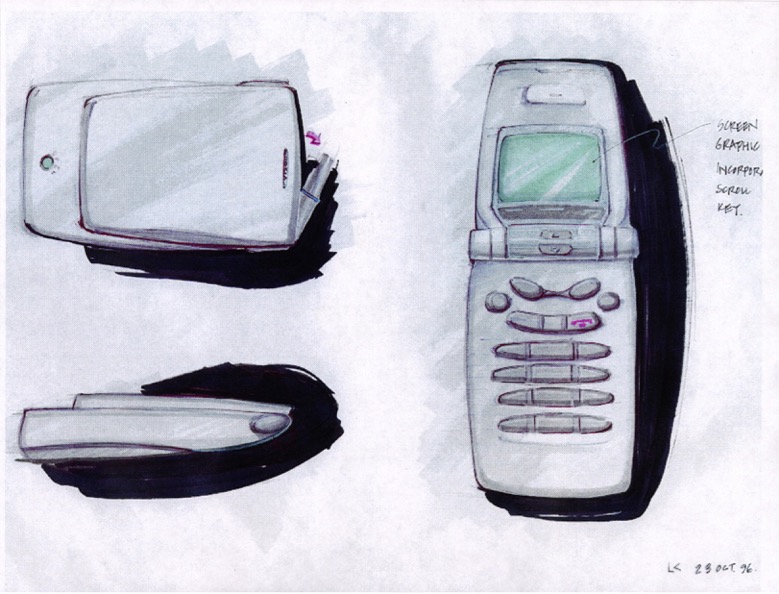
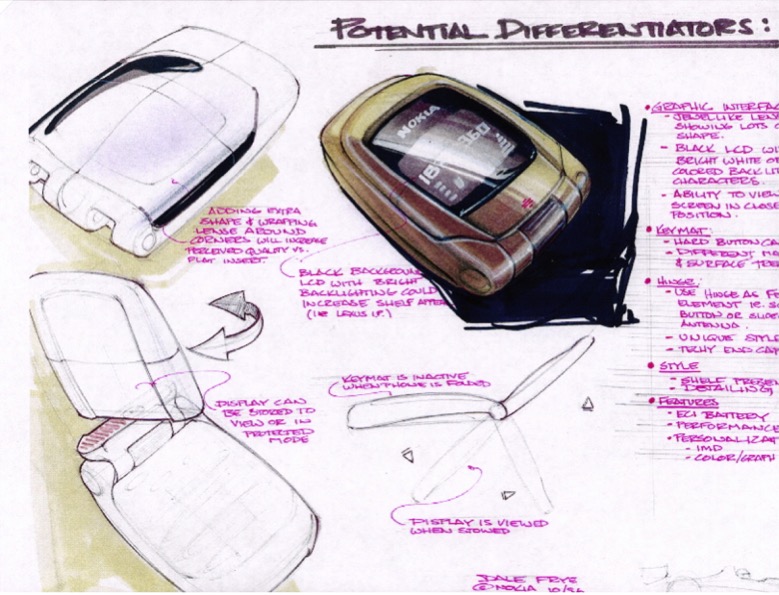
It was also a key step in fusing telephones with computers, which was Lindholm’s obsession. “It was an extremely exotic thought,” he says. “And the fact that Nokia brought out the first was surprising.” The assumption, back then, was that it would be more difficult to integrate computer capabilities into a phone than add telephone features into a computer. And achieving this unlikely milestone was one of many forces motivating the Nokia team.
“There was a supportive camaraderie,” says Lindholm, a “can-do attitude” and as the team was “rewarded with a series of escalating successes” their confidence grew. He also remembers the Nokia v Ericsson rivalry, “the Finns agains the Swedes”; a competition between “the locals and Motorola”; and years later, when Lindholm was working on Nokia’s smartphone interface Series 60, the big battle was against Microsoft. “And we managed to beat Microsoft at their own computing game,” he says.
Nokia lost its next battle, against Apple, for myriad reasons but Lindholm boils it down to the weighty legacy of the company. It slowed it down and, perhaps, stifled its imagination (there was a general belief, Lindholm says, that customers wouldn’t be interested in a smartphone if it didn’t have at least two days’ worth of battery life). That loss is an apt metaphor for Europe’s place in the tech space today. Still, Lindholm is certain our continent has the means to get its confidence back.
“And we managed to beat Microsoft at their own computing game.”
Christian Lindholm
“There are two types of creators, plumbers and pool boys,” says Lindholm. Without plumbing, there’d be no civilisation, but its the pool boys who get the attention. In Europe, we’re plumbers, well-educated, humble-to-a-fault plumbers. The pool boy attitude isn’t part of our culture: in the Nordics, people subscribe to the Law of Jante, which says ‘you’re not to think you’re special, or better than anyone else’; the Dutch say ‘the tallest tree catches the most wind’; and Brits are more likely to tell you how badly they’re doing than even attempt to boast.
“But what if we got good at celebrating the plumbers more?” Lindholm asks. “That’s what I find always amazing with Silicon Valley, it creates this meritocracy of opportunity at all layers in the stack.” Recapturing the confident competitiveness Lindholm felt at Nokia in the 90s would be a great place for new founders to start.
Navi-Key stats
- 700 million phones produced with it built-in
- 9 percent of the human population used Christian's invention
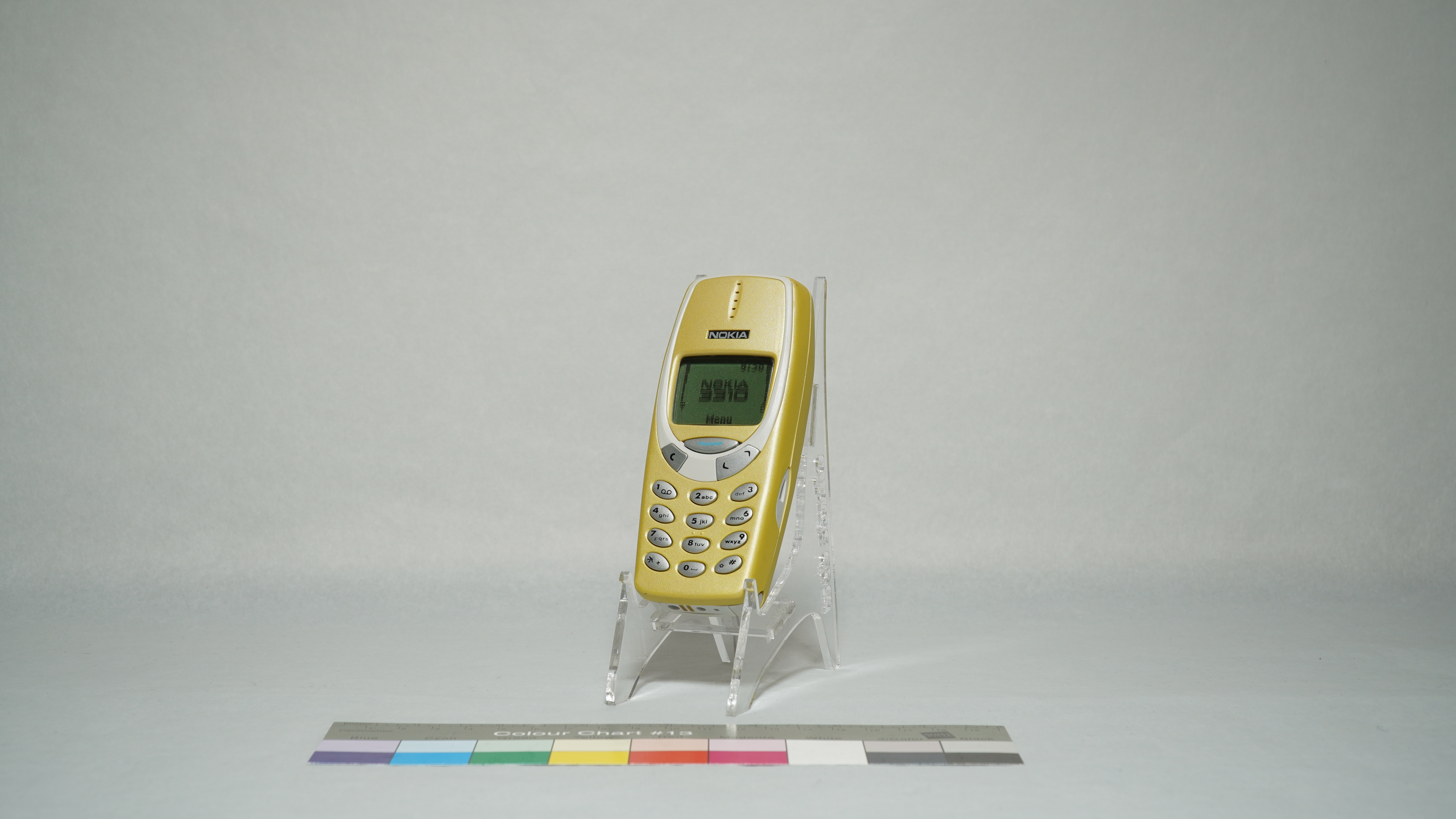
- 2000: the year the first phone with the Navi-Key (Nokie 3310) was released